
How to Bake Sourdough Bread Without Parchment Paper: Easy Tips & Alternatives

Why You Should Skip Parchment Paper When Baking Sourdough Bread
Parchment paper is commonly used for baking sourdough bread, I used it for years. Did you know that most parchment paper is not rated for temps above 450ºF? Here’s why you might want to skip it, and how a simple ingredient can work wonders instead.
Parchment Paper Can’t Handle High Temperatures
Sourdough bread requires baking at high temperatures, often 450°F (230°C) or higher. I bake my bread at 485ºF. Most parchment paper is only rated for temperatures up to 450°F (232°C), which means it can scorch or even release harmful chemicals at higher temps.It's an Ongoing Expense
Parchment paper is something you need to buy regularly, which can become an unnecessary ongoing expense, especially for frequent bakers. I’m always trying to buy fewer things anyway.Cornmeal to the rescue!
Instead of parchment paper, I use cornmeal to create a non-stick surface for my sourdough bread. Here’s how:Preheat your pan in the oven, as you would for regular sourdough baking.
Sprinkle a teaspoon of cornmeal on the bottom of the pan before placing your dough inside. This will help prevent sticking and give your bread a lovely, slightly crunchy bottom. The cornmeal handles the high heat of baking without issue, allowing the dough to rise perfectly and creating a delicious, crispy crust.
Eco-Friendly and Cost-Effective
Not only does using cornmeal eliminate the need for parchment paper, but it’s also an eco-friendly and cost-effective option. No waste, no constant shopping for parchment paper, just a simple pantry staple that works wonders.


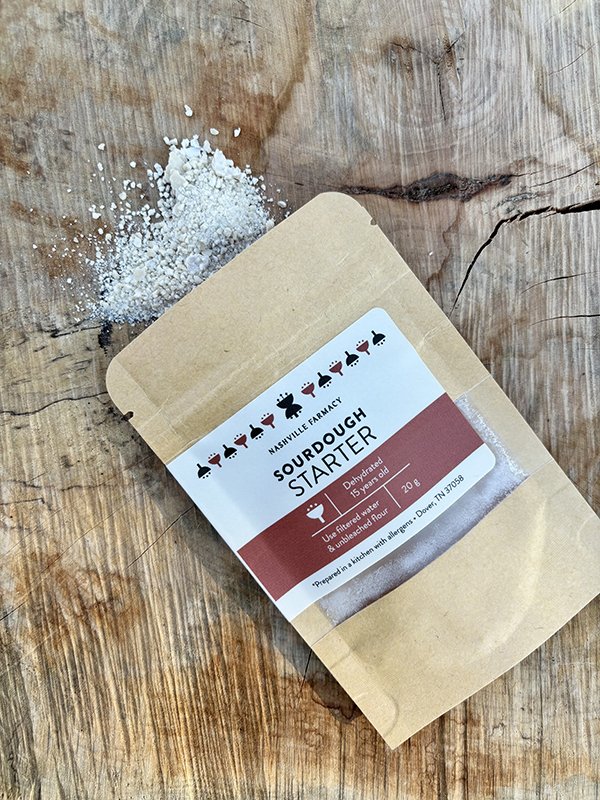
20 grams of dehydrated sourdough starter with instructions.
Place the starter flakes in a clean glass jar or container.
Add room temperature or lukewarm water to the jar, using a ratio of 1 part starter to 1 part water (by weight).
Stir the mixture until the starter flakes are fully dissolved in the water.
Cover the jar loosely with a lid or a cloth to allow airflow.
Let the mixture sit at room temperature for about 6 to 12 hours, or until bubbles form on the surface.
Once bubbles appear, feed the starter by adding equal parts (by weight) of flour and water to the jar, stirring well to combine.
Cover the jar again and let it sit at room temperature for another 6 to 12 hours, or until the starter becomes bubbly and doubles in volume.
Your rehydrated sourdough starter is now ready to use! You can use it immediately in a recipe or continue feeding it regularly to maintain its activity.
Remember to discard a portion of the starter before each feeding to prevent it from growing too large.
Always use un-bleached flour. Bleached flour can kill the yeast and bacteria in sourdough starter.